How It All Began: The Story of Ramah
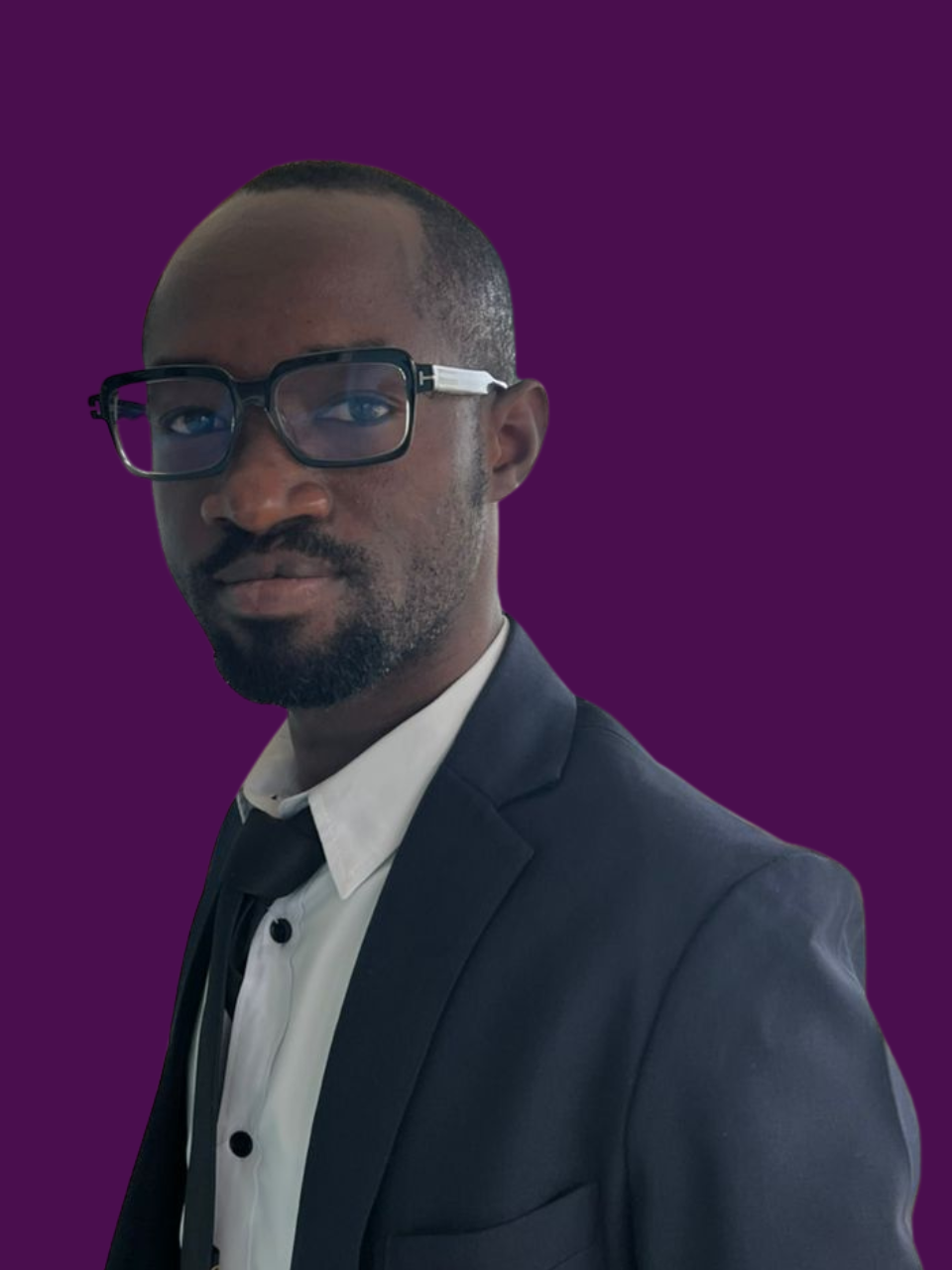
In June 2021, a Computer Science student at the University of Ghana watched his laptop break and spent the next forty days deciding what his working life was for. The answer was rooted in the ten years of generosity he had received, and in a conviction that the orphans, widows and children of Nabdam District deserved the same chance he was given.
A broken laptop and forty days
In June 2021, Patrick Attankurugu was a Level 300 Computer Science student at the University of Ghana when his laptop broke down. He faced weeks without the tool his studies depended on.
He used those weeks on a question he had been putting off: what he actually wanted his working life to be for. He gave it forty days. The answer he came back with was not a career plan. He wanted to spend his life on the position that widows and orphans are left in, and he wanted to do it in the region he came from.
A door opened through service
The reason that answer felt personal began five years earlier.
In 2016, Patrick had just completed senior high school and written his WASSCE exams. With no immediate path forward, he found a placement through an employment agency and travelled south, arriving in Accra on 2 June 2016. He moved into the home of a family he would live with and serve, and stayed for the next ten years.
Three months later, his WASSCE results arrived. They were excellent. After a year, the family made a decision that changed the course of his life: recognising his potential, they paid for him to study Computer Science at the University of Ghana. Patrick attended lectures each day and returned to the household each evening. It was an arrangement built on trust on both sides.
What that household taught him
Over the years, Patrick watched up close what it looks like when people invest in someone else's potential. He absorbed the quiet mechanics of economic independence: the discipline, the long view, the courage to start before everything is ready. He learned that dignity is not something handed to a person. It is something they are positioned to build for themselves.
The family did not give him charity. They gave him a platform. That distinction, between aid that creates dependence and investment that creates independence, became the foundation of everything Ramah would later stand for.
A debt that can only be repaid forward
By the end of those forty days in 2021, Patrick knew what he wanted to do, and he understood why it felt so personal.
He had received something rare: people who believed in his potential and backed that belief with their money and time. He decided he would spend his life replicating it for others, and that he would do it for the orphans, widows and vulnerable children of Nabdam District, people from his own region who would not get the chance to travel to Accra and find what he had found.
The goal was clear: do not bring them to opportunity. Bring opportunity to them. Empower them where they are.
The start-anyway moment
Patrick wrote the idea down in 2021 and set himself a condition: he would only begin once he had left the household, which he planned to do in 2023.
July 2023 came. He was still there.
Rather than wait any longer, he called five friends, told them what he wanted to build, and asked them to help him start. They said yes. For the next year the six of them read everything they could find on how to lift the poor from ultra poverty to economic independence, and quietly prepared the ground. They were not well-resourced. They were not yet even well-organised. But they had started.
On 16 September 2024, the organisation was registered with Ghana's Registrar-General's Department as a company limited by guarantee (Reg No: CG064480924). The name Ramah comes from the Hebrew word for "a place of elevation": a place of hope, ascent, and restoration.
Ten years, to the day
On 2 June 2026, ten years to the day after he arrived in Accra, Patrick left the household that had shaped him.
He works today as a Senior AI Engineer at Agregar Technologies, building KYC, anti-money-laundering and compliance systems for African financial institutions. The founding five have become a registered organisation with a board and a governance structure.
Looking back, Patrick does not see the decade as a detour. He sees it as preparation.
That is Ramah.
Where the work will happen
Ramah works in Nabdam District in Ghana's Upper East Region, the same region Patrick grew up in.
The Ghana Statistical Service's Multidimensional Poverty report, built on the 2021 Population and Housing Census, ranks Nabdam the poorest of Ghana's 261 districts. Its multidimensional poverty rate is 68.6%, nearly three times the national rate of 24.3%. Its 84 communities are 100% rural: the District Assembly's 2026 composite budget records no locality reaching the 5,000-person urban threshold. The literacy rate is 45.9% among the population aged 6 and over, so more than half cannot read and write. Sanitation coverage stands at 12%. The district has one public senior high school and no technical or vocational school at all, which is the gap Ramah's vocational training is built for.
That gap is our mandate.
What we have not done yet
Ramah has not run a programme. No widow has been trained, no child enrolled, no savings group seeded. Our first field pilot runs in December 2026, and everything described here is preparation for it.
We say that plainly because the alternative is to let you assume otherwise. When you give to Ramah now, you are funding the pilot that has to work before anything larger can honestly be asked for: the training, the equipment, the start-up capital that goes to the first cohort, and the monitoring that will tell us, and tell you, whether it worked.
What began as one household's decision to invest in one young man is being rebuilt, deliberately, into something a community can run for itself.
"Pure and genuine religion in the sight of God the Father means caring for orphans and widows in their distress." James 1:27 (NLT)